
Skeleton Key to Life, Part 5 - Digital Legacy & Personal Records in Florida

Part 5– Digital Legacy & Personal Records in Florida: Protecting Your Online and Personal Story
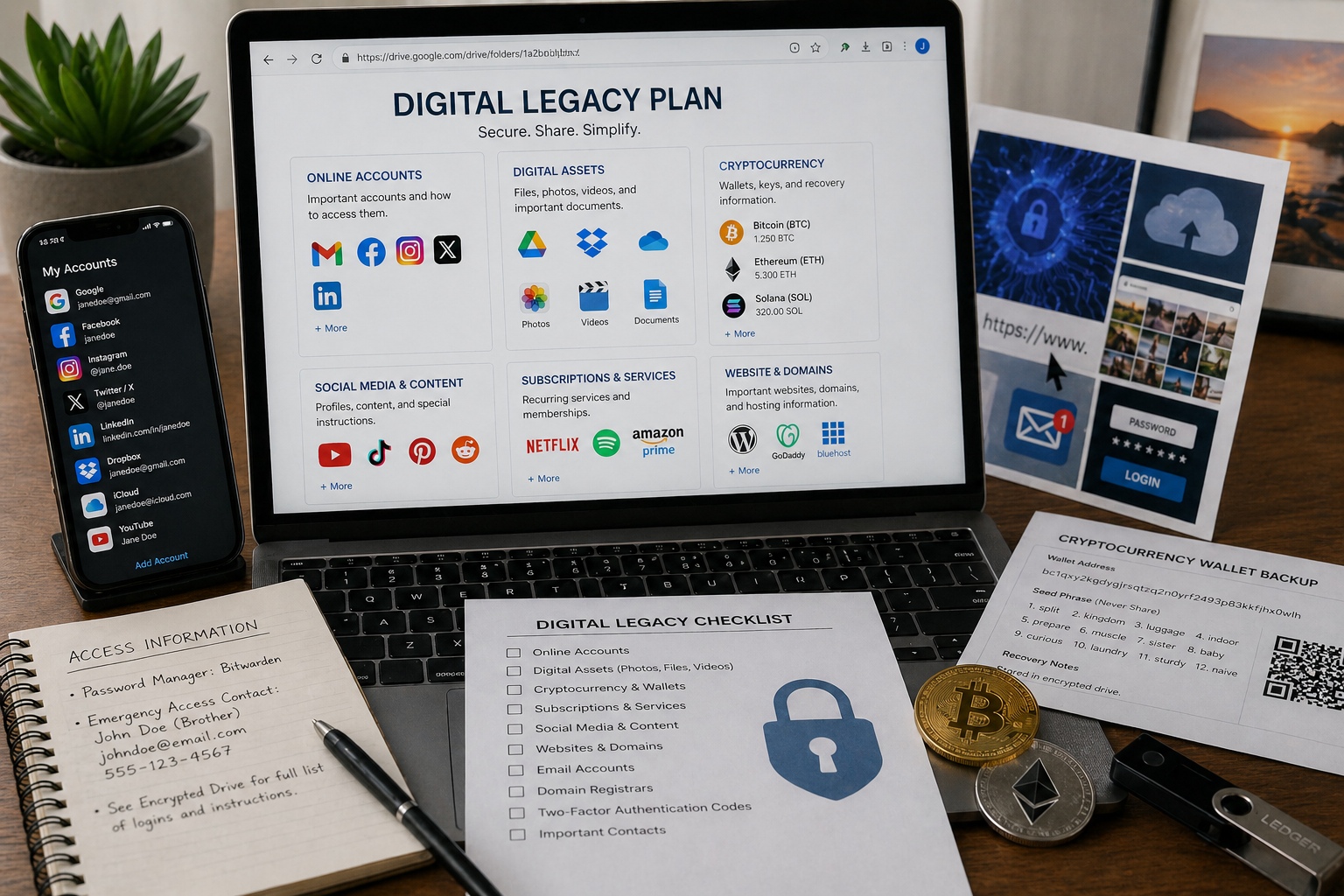
When most people think about estate planning, they imagine wills, trusts, or dividing up houses and bank accounts. Yet in today’s world, an estate is not just tangible property — it is also digital property. From email accounts and online banking and cyrpto-currency wallets, to Instagram photos and family genealogy files, every day, more and more of our life is stored in the cloud.
If you fail to plan for these assets, they may be lost, inaccessible, or even susceptible to fraud. Other mementos and personal records, such as journals, letters, orfamily trees, often have greater sentimental value than any dollar figure.Together, your digital and personal legacy make up the story you leave behind.
This post explores why Florida law now addresses digital assets, what steps you cantake to protect your legacy, and why personal records should never be overlooked in estate planning.
What Are Digital Assets?
Digital assets include any electronically stored information, such as:
- Social media accounts (Facebook, Instagram, TikTok
- Email accounts (Gmail, Outlook, Yahoo)
- Cloud storage (Google Drive, Dropbox, iCloud).
- Online financial accounts (banking, crypto wallets, brokerage apps).
- Subscriptions (Netflix, Spotify, Amazon Prime).
- Digital photographs, music, or intellectual property.
The question is not whether you have digital assets — you do — but whether anyone will be able to access or manage them if you are incapacitated or deceased.
The Digital Assets Statutes
Recognizing this issue, many states have adopted the Revised Uniform Fiduciary Access to Digital Assets Act (RUFADAA), in Florida, it is codified in F.S. Chapter 740.
This gives the authority to your fiduciaries (such as personal representatives, trustees, or agents under power of attorney) who may access digital assets, if authorized. However, the statute requires explicit consent in estate planning documents. Without it, companies may refuse access, citing federal privacy laws. In the absence of authorization, fiduciaries must often seek a court order to compel access, delaying estate administration.
If you die with valuable digital currency in an online wallet, but fail to provide access credentials and authorization, your heirs may never recover it.
For instance, there can be Federal privacy barriers. Even with state laws like RUFADAA, service providers are restricted by the Stored Communications Act (SCA), 18 U.S.C. §§ 2701–2712, which limits disclosure of electronic communications. Courts have generally sided with providers when no explicit consent was provided.
Case Example: In In re Facebook, Inc., 923 F. Supp. 2d 1204 (N.D. Cal.2012), a family was denied access to a deceased loved one’s account due to privacy concerns. This case illustrates why proactive planning is essential.
Digital Executors
A practical tool is appointing a “digital executor” in your estate plan. This is the person tasked with: (i) Closing or memorializing social mediaaccounts, (ii) Accessing email and financial platforms, (iii) Managing ortransferring cryptocurrency, (iv) Preserving photographs, writings, and onlinefamily history.
Under Florida’s statute, this role is typically assigned through a will, trust, or durable power of attorney.
Risks of Inaction
Failing to plan for digital assets creates real consequences. Identity Theft can occur, as hackers may target dormant accounts. Family memories including digital photos,videos, or genealogy files may be lost, deleted or inaccessible. Unpaid bills or subscriptions with automatic withdrawals may drain bank accounts long after death. Business disruption can occur if deceased entrepreneurs with digital storefronts risk losing entire businesses if heirs cannot access accounts.
Personal Records: The Overlooked Legacy
Beyond online assets, personal records are often the heart of your legacy.These include: Handwritten journals or memoirs, family letters and correspondence, genealogical research or family trees, recipes, photo albums,or scrapbooks.
Courts distribute money and property but cannot preserve family history. Only you can ensure these treasures are protected, organized, and passed down.
Practical Steps to Secure Your Digital & Personal Legacy
Easy steps to secure your legacy includes
1. Inventorying Your Digital Assets. Make a master list of accounts, passwords, and instructions. Consider secure password managers or estate planning vaults.
2. Authorize Access. Include digital asset clauses inyour will, trust, and durable power of attorney to comply with F.S. Chapter 740.
3. Appoint a Digital Executor. Name a trusted individual whounderstands both technology and your wishes.
4. Preserve Personal Records. Digitize family photographs, recordoral histories, and back up files. Store originals in a safe place and copiesin the cloud.
5. Decide What Should Happen. Some accounts may be memorialized(Facebook offers this feature), while others should be deleted or transferred.
Checklist: Digital & Personal Legacy Planning
- List all online accounts and passwords.
- Add digital asset authorization to estate documents (F.S. 740.005)
- Appoint a digital executor
- Back up family photos, letters, and journals
- Communicate wishes to heirs
Estate planning is no longer just about land and bank accounts. It is about protecting your digital presence and personal story. With explicit authorizationunder F.S. Chapter 740, your fiduciaries can access and manage your online life. By preserving personal records, you ensure your loved ones inherit more than money — they inherit your values, history, and memories.
Failing to plan may result in lost assets, family frustration, or even permanent erasure of your story. With planning, your digital and personal legacy is unlocked and becomes a living part of your family’s history.
Missing any one piece of this plan can cost your family time, money, and heartache — stay with this series to make sure nothing falls through the cracks. READ MORE BELOW:
Part 3: Financial Planning & Asset Management for Protecting & Preserving your Estate
About the Author: Terra L. Sickler, Esq. is one of the founders of the law firm Twig, Trade, & Tribunal, PLLC, in Fort Lauderdale Florida. She practices Dirt (real estate law) and Death (estate planning and probate). She can also be found @the.Terra.attorney providing legal insights on real life & death issues that we will all face, one day.


